

Guest post by Mike Hansky, London Tourist Map
British food used to have a reputation problem. That reputation is long out of date, and nowhere proves it better than London. The city still does the old classics, fish and chips, a Sunday roast, pie and mash, a full English, properly, and it now has dining rooms and pubs that cook them with real care and very good ingredients.
I don’t live in London, so this guide is written from a visitor’s point of view. It is for couples who want to eat the classic British plates and eat them well, without turning the trip into a hunt for the cheapest meal. For each dish you’ll find what it is, how to order it, and a couple of well-regarded places to try it. The tastes and tips in the first person are my own; the restaurant suggestions are researched recommendations, checked this month, so always confirm hours before you go.
Fish and Chips
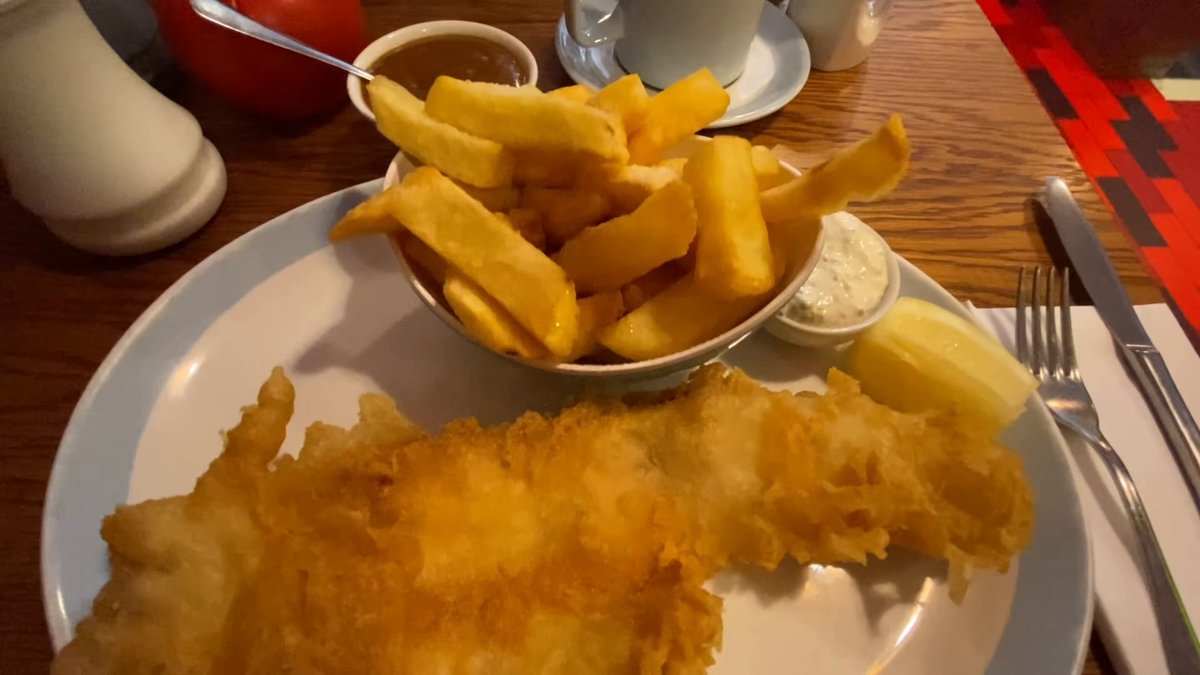
If you only eat one British dish in London, make it this one. A good plate is a fillet of cod or haddock in a thin, crisp batter, thick-cut chips, a wedge of lemon and, usually, a pot of tartare sauce. Cod is the classic choice and flakes into big white petals; haddock is a little sweeter and firmer. Mushy peas are the traditional side, and many chippies also sell curry sauce, gravy and pickled onions.
That batter crackled so loudly I laughed out loud. I should have ordered the curry sauce from the start, not halfway through. Learn from me: order it with the fish, and use it for the chips.
Where to try it: The Golden Hind on Marylebone Lane has been frying fish since 1914 and is a proper sit-down restaurant that takes bookings, which makes it an easy choice for a relaxed lunch or dinner for two. Its menu lists cod, haddock and plaice, fried or steamed, with mushy peas among the sides. Poppies, on Hanbury Street in Spitalfields, is the more playful option, with a retro East End look and long opening hours, and it also has branches in Camden and Soho.
A Proper Sunday Roast
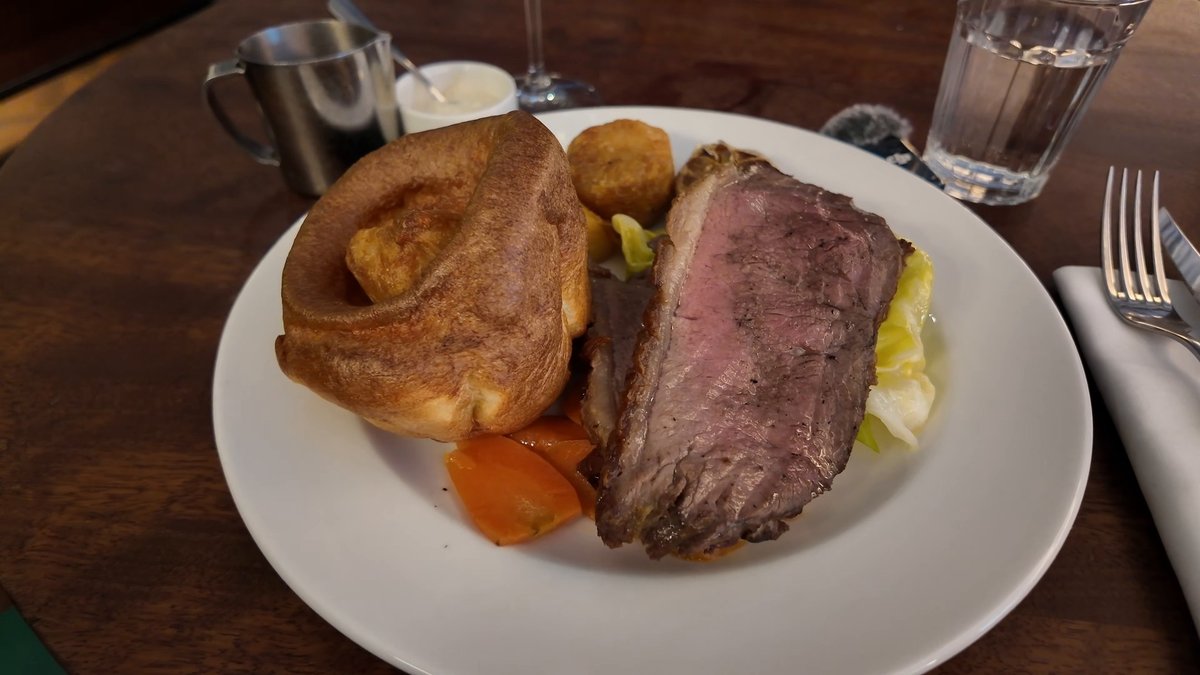
The Sunday roast is the meal the British look forward to all week: roast meat (beef, lamb, pork or chicken), roast potatoes, seasonal vegetables, gravy and, with beef above all, a Yorkshire pudding. That last one is not a dessert. It is a batter baked in very hot fat until it puffs up into a crisp, hollow shell.
My Yorkshire pudding was taller than my glass of water, and I tore it apart with my fingers. Pour the gravy straight into the hollow. That is exactly what the hollow is for.
Where to try it: For a sense of occasion, book the Grand Divan at Simpson’s in the Strand, the historic home of the English roast. Roast rib of beef is wheeled to the table on a silver trolley and carved in front of you, with Yorkshire pudding, roast potatoes and horseradish. It is served at lunch and dinner every day, not only on Sundays. For a top-end pub version, The Harwood Arms in Fulham bills itself as London’s only Michelin-starred pub and serves roasts all day on Sunday, from noon to 8:15pm. It books up weeks ahead, so reserve as soon as your dates are fixed.
Pie and Mash, a London Classic
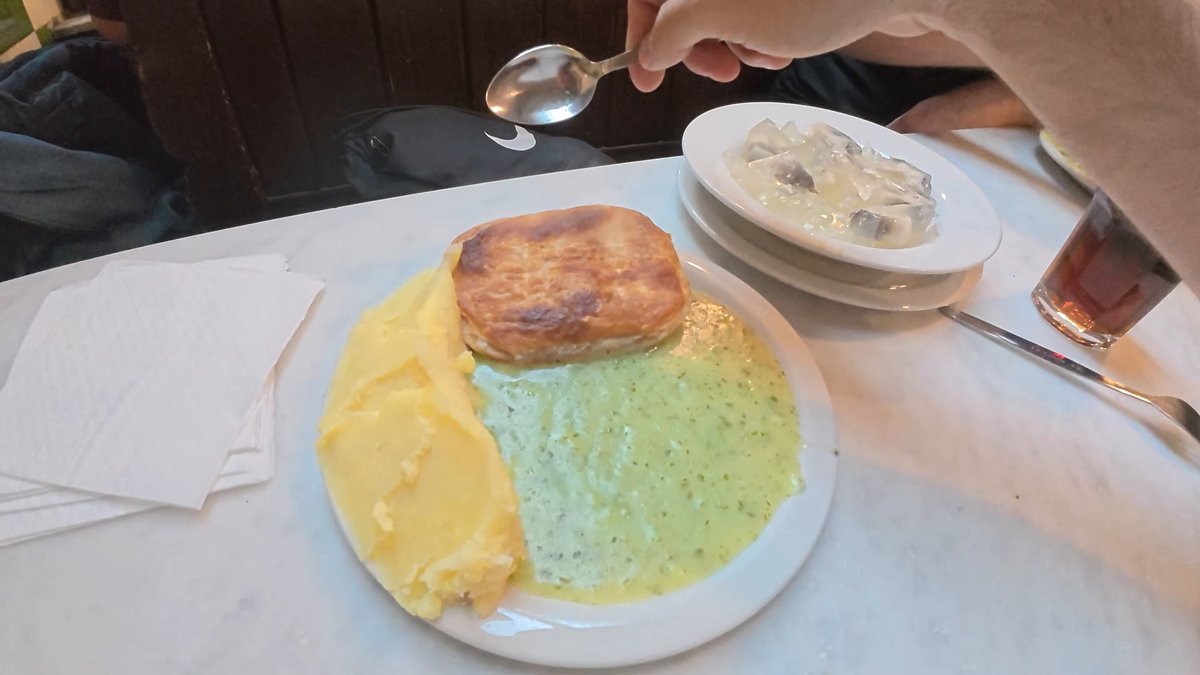
This is London’s own fast food, and the dish most visitors have never heard of. A minced beef pie comes with a scoop of mashed potato, traditionally scraped flat across the plate, and a ladle of “liquor”, a smooth green parsley sauce. Liquor was traditionally made with the stock left over from cooking eels, which is why old pie shops also sell eels, served jellied (cold) or stewed (hot). The shops themselves are part of the experience, often with tiled walls, marble tables and wooden benches.
Honestly the liquor looked odd until I tasted it, then I was mopping it up with the crust. Ask for chilli vinegar, it changes everything. Most pie shops keep it on the table or will bring it if you ask.
Where to try it: M. Manze on Tower Bridge Road has been serving pie and mash on the same site since 1902, and is about a mile south of Tower Bridge. Its Sunday hours are short, so go on a weekday or Saturday if you can. In Greenwich, Goddards on King William Walk continues a family pie business founded in 1890 and opens every day, which makes it an easy lunch before a walk in Greenwich Park.
The Full English Breakfast
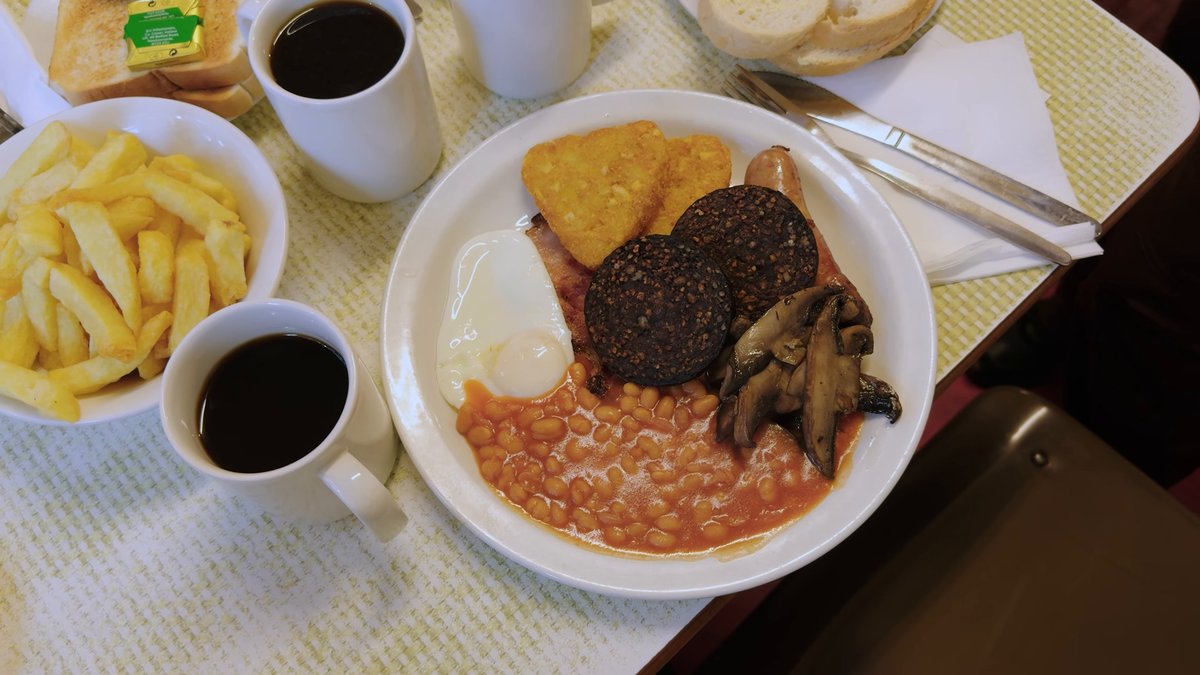
A full English is a hot cooked breakfast that tends to replace lunch: eggs, bacon, sausage, baked beans, grilled tomato and mushrooms, with toast or fried bread, and often black pudding (a rich blood sausage) and hash browns. Order a pot of tea with it, ask for your eggs fried, poached or scrambled, and don’t plan anything strenuous for an hour afterwards.
London has two very different places to eat one. The first is the traditional “caff”, the no-frills cafes where tradespeople fuel up before work. Queueing at the counter with builders at 8am felt like being let in on a secret. Black pudding was the surprise winner on my plate, so don’t skip it.
Where to try it: E. Pellicci on Bethnal Green Road is a family-run East End cafe with a famous wood-paneled interior. It opens Monday to Saturday from 8am, takes walk-ins only and is closed on Sundays. At the other end of the scale, The Wolseley on Piccadilly is a grand Art Deco cafe where breakfast is an event in itself. Its full English comes with black pudding, and breakfast is served from 7am on weekdays and 8am at weekends. Book a table, particularly at weekends.
Pub Lunch: Scotch Eggs and a Pint
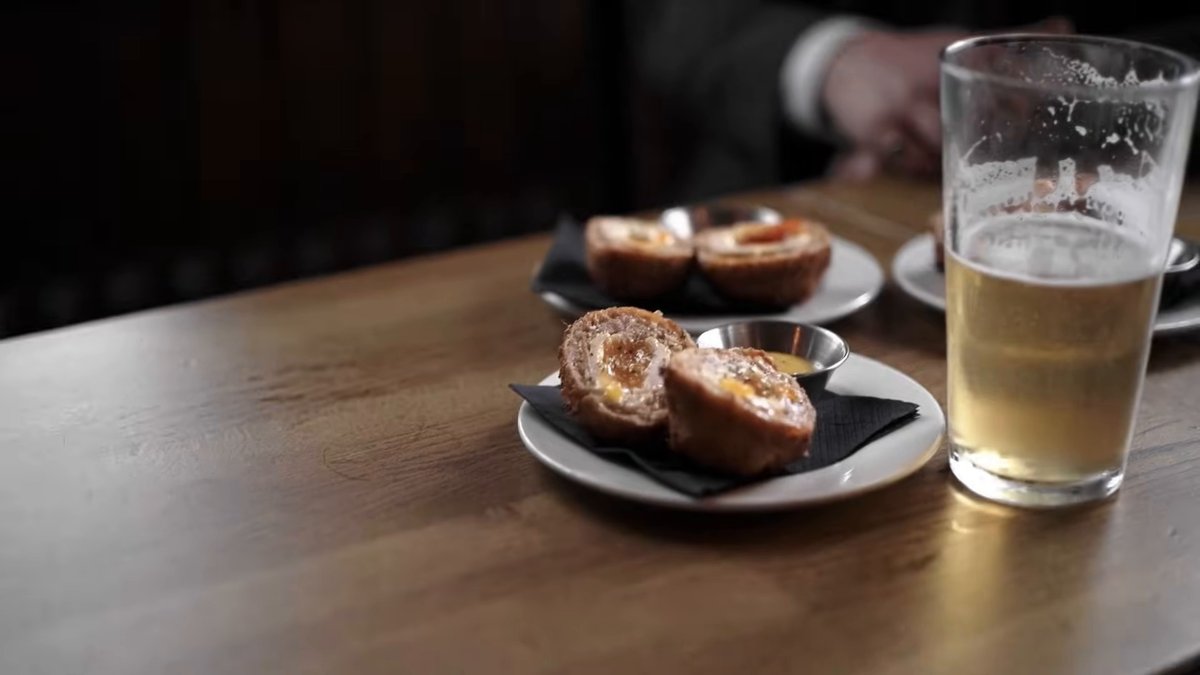
A Scotch egg is a boiled egg wrapped in sausage meat, coated in breadcrumbs and fried. The gas station versions sold cold in plastic have given it a bad name, but a freshly made one, served warm with a soft yolk, is one of the best pub snacks in the country. They usually come halved, with mustard or a relish on the side.
Runny yolk, still-warm sausage meat, and a cold pint next to it: I ordered a second before I finished the first. If you are sharing, order two from the start.
Where to try it: The Harwood Arms in Fulham is known for its venison Scotch egg, which sits on the snacks list, so you can order one with a drink before a meal. Fortnum & Mason on Piccadilly claims to have invented the Scotch egg in 1738 as a snack for travelers, and its food hall on the lower ground floor sells them ready-made (availability varies, so check the counter), which makes a smart picnic if the weather is kind.
Puddings: Sticky Toffee and Friends
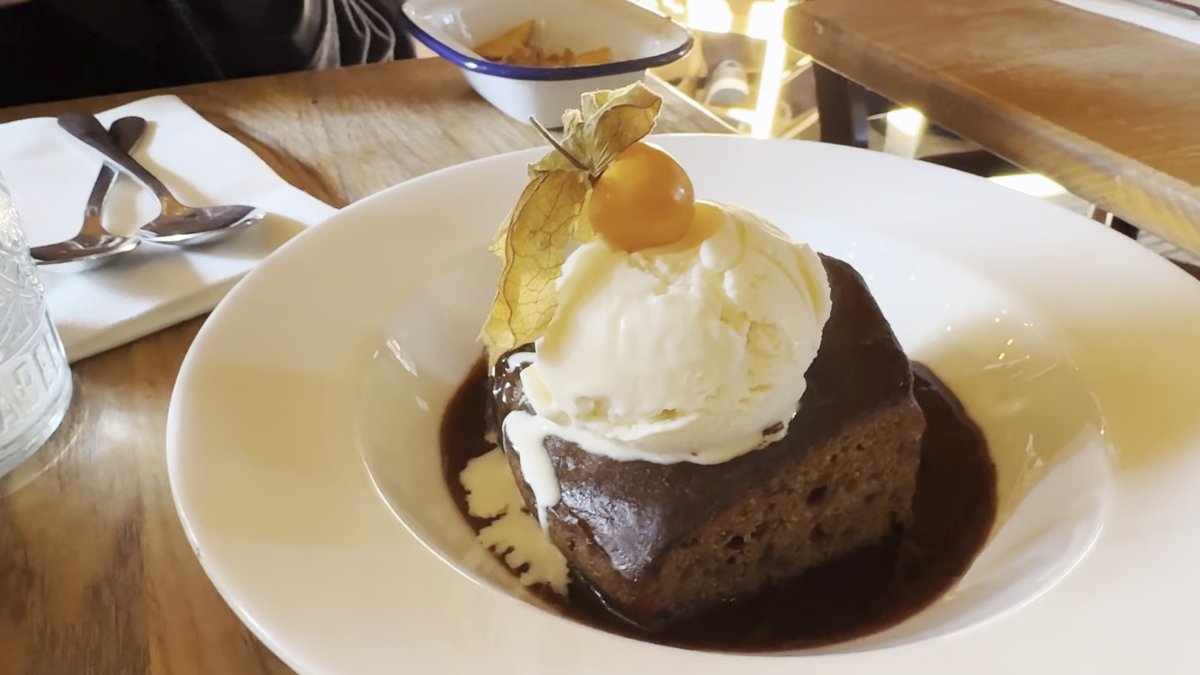
In Britain, “pudding” can mean any dessert, and the classics are warm and generous. Sticky toffee pudding is the star: a soft sponge made with dates, soaked in a hot toffee sauce and served with ice cream, cream or custard. Look out too for Eton mess, a summer tangle of strawberries, cream and crushed meringue, and spotted dick, a steamed suet sponge studded with dried fruit and drowned in custard.
Sticky, dark and almost too sweet after a hot afternoon walk, and I didn’t care. The ice cream melted into the toffee within a minute, so eat fast.
Where to try it: Rules on Maiden Lane in Covent Garden was founded in 1798 and is London’s oldest restaurant. It specializes in traditional British food, including game in season, and its dessert menu includes a sticky toffee pudding with toffee sauce. Note that Rules is closed on Mondays. The Harwood Arms also lists a sticky toffee pudding on its Sunday menu, so it can finish your roast there.
A One-Day Classic British Food Plan
You can eat most of this list in one long, happy day by sticking to two or three neighborhoods and walking between them.
- Breakfast in Piccadilly: a full English at The Wolseley, then a walk through St James’s.
- A snack or picnic: pick up Scotch eggs at Fortnum & Mason, a few doors along Piccadilly, and eat them in Green Park or St James’s Park.
- Afternoon in Covent Garden: wander the theater district and save room. If you want a pudding stop, Rules opens from noon, Tuesday to Sunday.
- An early roast dinner on the Strand: finish at Simpson’s in the Strand, a short walk from Covent Garden, where the carving trolley comes round at dinner as well as lunch.
If you prefer the East End, swap in a breakfast at E. Pellicci, fish and chips at Poppies in Spitalfields for lunch, and pie and mash at M. Manze on a weekday. Either way, book the dinner and leave breakfast and lunch flexible.
Practical Tips for Eating British Classics in London
Book Sunday lunch early. The best-known roasts are booked up days or weeks ahead, especially in winter. If you can’t get a table, look for a later sitting; some pubs serve roasts until the evening.
Know how a pub works. In most traditional pubs you order drinks, and often food, at the bar, give your table number, and the food is brought to you. Nobody expects a tip at the bar. Gastropubs and restaurants usually offer table service instead.
Check the service charge. Many London restaurants add a discretionary service charge of around 12.5 percent to the bill, and some charge more, so check before you add a tip. If you are unhappy with the service you can ask for it to be removed.
Watch kitchen times. A pub can be open until late while its kitchen stops serving much earlier, and Sunday kitchen hours are often shorter. Check before you arrive hungry at 9pm.
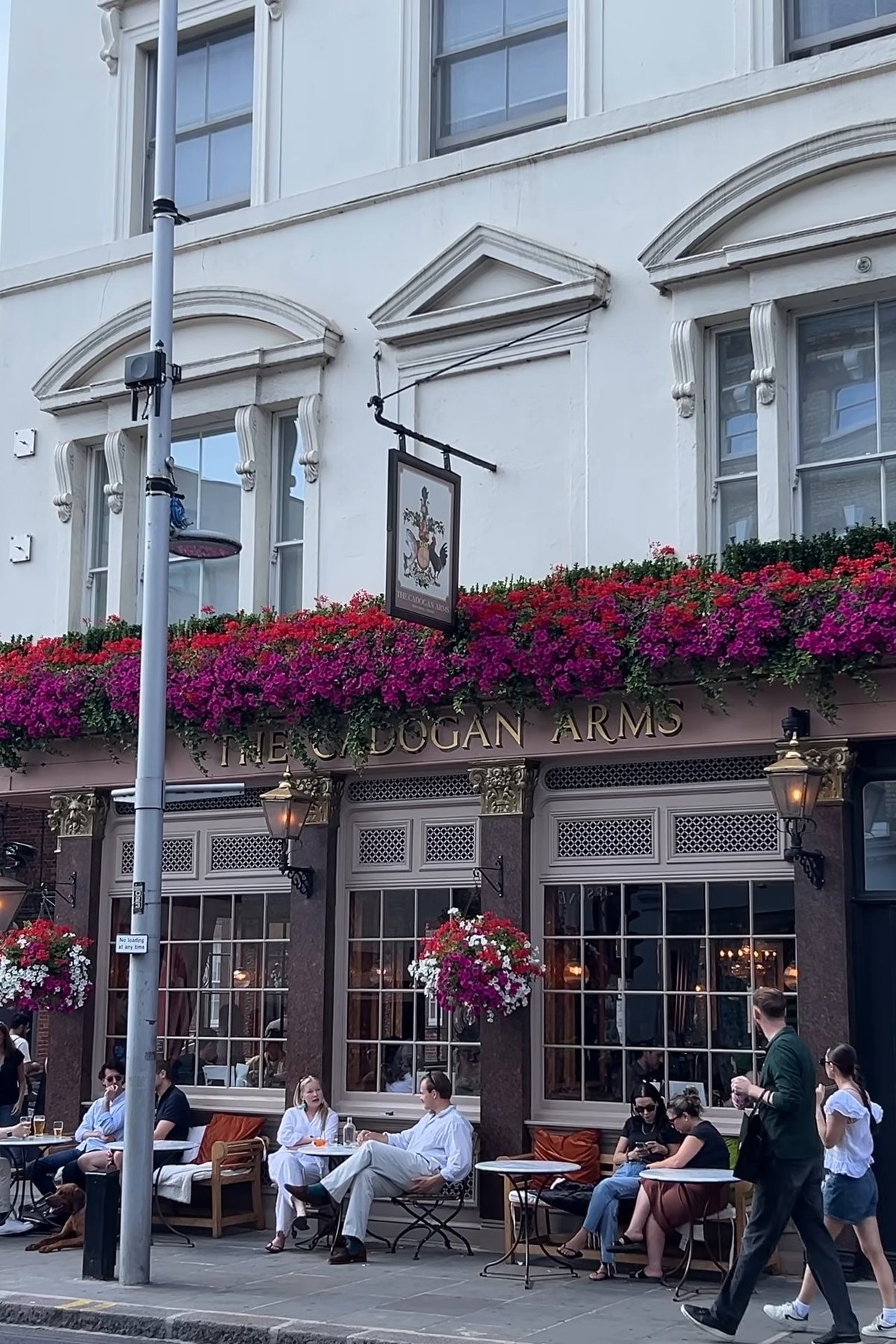
Claim a pavement table early on a sunny day. Outside The Cadogan Arms on the King’s Road, I sat under that wall of petunias and lost an hour to people-watching. Get there before 6, or the pavement tables all go. The same goes for most pubs with outdoor seating in summer.
Final Thoughts
The classic British dishes are not complicated, and that is their charm. What makes them memorable in London is eating them in the right setting: fish and chips in a dining room that has been frying for a century, a roast carved at the table, pie and mash at a marble table, a full English among people heading to work, and a sticky toffee pudding that you really should eat before the ice cream melts. Plan your days around a few of them, book the roast, and leave the rest of the day free for walking it all off.
About the Author
Mike Hansky is a travel writer and the co-founder of London Tourist Map. He writes practical guides for visitors to London, from where to eat the classics to how to plan a day by neighborhood. You can explore the city’s sights on my free London map.

Laura Lynch, creator and writer of Savored Journeys, is an avid world traveler, certified wine expert, and international food specialist. She has written about travel and food for over 20 years and has visited over 75 countries. Her work has been published in numerous guidebooks, websites, and magazines.