

A campervan road trip sounds simple. You pick up a van, drive somewhere beautiful and sleep wherever the day ends. Then you start looking at rental sites, run into words like “excess,” “Class C” and “mileage package,” and it suddenly feels a lot less simple.
The good news is that renting a campervan works a lot like renting a car, with a few extra things to think about. You’re renting your transportation and your bed in one go, so the vehicle size, the insurance and the fine print matter more than usual.
Whether you’re planning a national parks loop in the U.S., a week in the Scottish Highlands or a big trip around New Zealand, here’s what’s worth knowing before you book your first campervan.
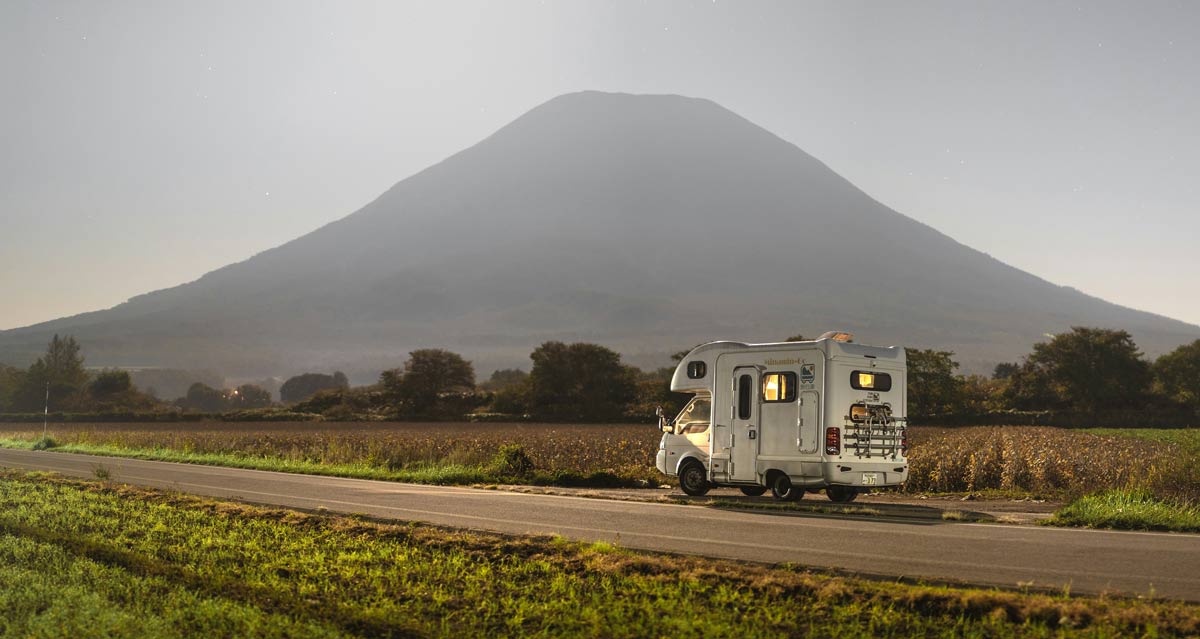
1. Campervan, Motorhome or RV: Know What You’re Looking At
The names get mixed up a lot, and they change depending on where you are.
- Campervans are the smallest option. They’re usually built on a van, sleep one to four people and drive a lot like a big car.
- Motorhomes are bigger, with more living space and often a proper bathroom. Alcove motorhomes have a bed over the driver’s cab and are popular with families.
- RV is the word you’ll hear most in North America. Rental RVs there are often Class C models, which also have a bed over the cab, while Class A RVs are the big, bus-shaped ones.
The simple rule is to pick the smallest vehicle that fits everyone comfortably. More space sounds great until you’re trying to park in a small town or squeeze down a narrow country lane. Bigger vehicles also burn a lot more fuel. As a rough guide, a campervan uses around 8 to 14 liters per 100 km (about 17 to 29 mpg), while a Class C RV uses around 17 to 28 liters per 100 km (about 8 to 14 mpg).
2. Check Your Driver’s License and Age
In the U.S., a standard driver’s license covers most rental motorhomes. Very large Class A RVs over 26,000 lbs can require a commercial license in some states, but those are rarely offered as rentals.
In the UK it’s stricter. If you passed your test on or after January 1, 1997, your standard car license (category B) only covers vehicles up to 3,500 kg maximum authorized mass, and most of Europe uses the same limit. Plenty of campervans fall under that. Some larger motorhomes don’t, and you’d need a C1 license to drive them. If you passed before 1997, check your license, since older licenses can carry extra entitlements. Either way, check the vehicle’s weight before you book, not at the counter.
If you’re renting in another country, also check whether you need an International Driving Permit to go with your home license.
Then there’s age. Minimum ages vary by company. In the U.S., 21 and 25 are common cut-offs, and some companies add a young driver surcharge. If you’re under 25, check this first so you don’t fall for a van you can’t actually book.
3. Read What the Price Actually Includes
The daily rate is rarely the full story. Before you compare prices, check these:
- Mileage. Some companies include unlimited miles. Others, especially in the U.S., include a set number of miles per day (often 100 to 125) and charge for every mile over that, or sell mileage packages. On a long trip, this can change the total a lot.
- Kitchen gear and bedding. Some vans come with pots, plates, sheets and pillows. Others charge extra. At Cruise America, for example, the kitchen kit and the personal kits with bedding and towels are paid extras you reserve ahead of time.
- One-way fees. Picking up in one city and dropping off in another is perfect for routes like San Francisco to Las Vegas or Melbourne to Brisbane. Many companies charge a one-way fee for it, though a few don’t. Either way, book it as a one-way trip. Dropping the van somewhere you didn’t agree on can get you a relocation fee.
- Extras. Additional drivers, camping chairs and child seats are included by some companies and charged by others. Pet policies vary too, and some companies don’t allow pets at all.
4. Understand the Insurance and the Deductible
This is the part that confuses most first-timers. Basic insurance usually comes with the rental, but it has a deductible, called the “excess” in the UK, Australia and New Zealand. That’s the most you’d pay if the van gets damaged, and on campervans it can easily run to several thousand dollars. Many companies hold that amount on your card as a bond when you pick up.
You can usually pay a daily fee to bring the deductible down, sometimes all the way to zero. Before you pick a level, check exactly what it covers. Roof, underbody, windshield and tire damage are often treated separately from the rest of the van.
Don’t assume your credit card or your own car insurance has you covered, either. Many policies don’t extend to motorhome rentals, so check before you travel. Don’t make a costly rental mistake.
5. Book Early, Especially for Summer
In the U.S., rates tend to climb in peak months like July and August, and booking early simply gives you more vans to choose from.
When you book, check whether it’s an instant booking or on request. Instant means it’s confirmed straight away. On request means the rental company still has to approve it, usually within 24 to 48 hours. Also read the cancellation terms. Many companies give a full or partial refund up to a set number of days before pickup, but the details differ.
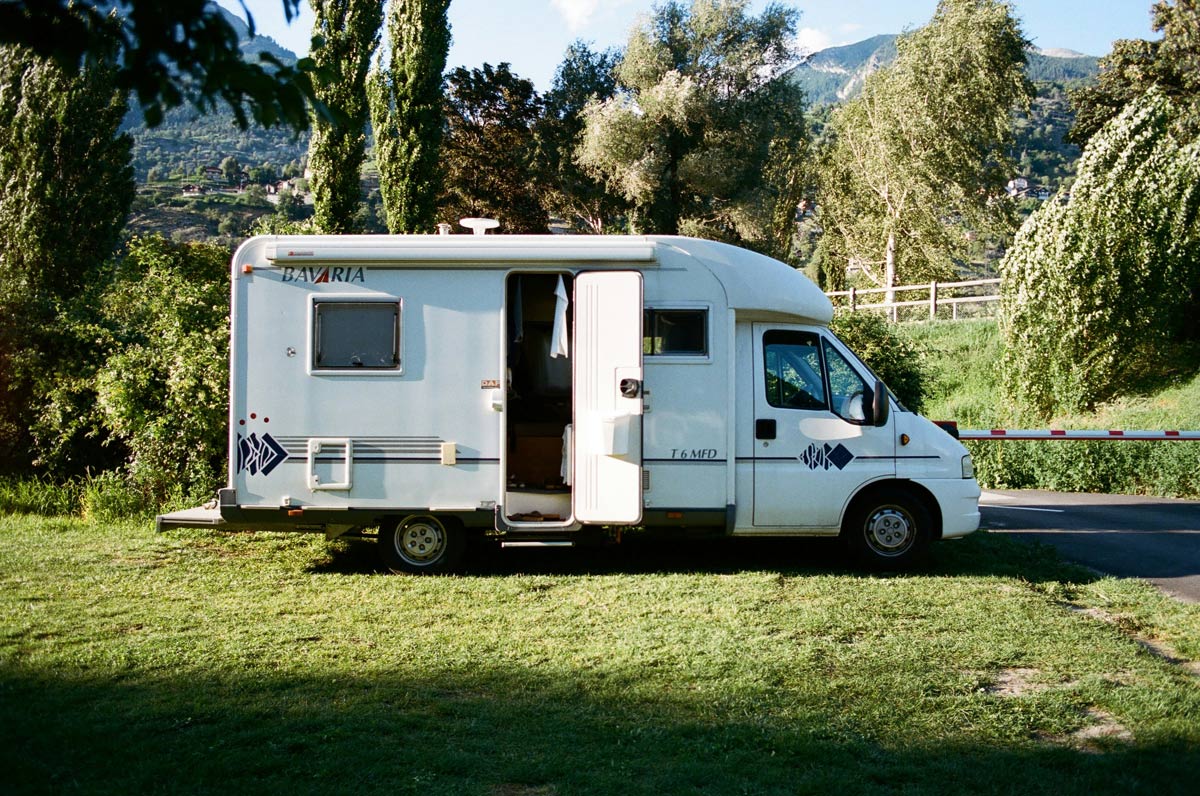
6. Plan Where You’ll Sleep
The van is your bed, but you still need somewhere to park it legally at night.
- Campgrounds and RV parks are the easiest choice for a first trip. Many have powered sites with hookups for electricity, water and sewer, plus showers and laundry.
- National and state park campgrounds in the U.S. are some of the best spots to wake up in, but popular ones book up well ahead, so reserve early.
- Free camping and wild camping rules vary a lot by country, region and even town. Some places allow overnight stays, others ban them completely. Check the local rules before you assume you can stay the night.
Wherever you end up, follow the Leave No Trace principles. Pack out your trash, empty your tanks only at proper dump stations and leave your spot the way you found it.
7. Take Your Time at Pickup
Don’t plan anything tight for pickup day. At many U.S. depots, the paperwork and vehicle walkthrough take 60 to 90 minutes. Bring your booking confirmation, your license, a passport or photo ID and a credit card in the main driver’s name for the deposit.
Use the walkthrough properly. Ask how the water, power, toilet, gas and heating work, and where you can empty the tanks. It’s much easier to ask in the parking lot than to figure it out in the dark at a campground.
Then walk around the van and photograph or film every scratch and dent before you drive off. Make sure they’re noted on your paperwork too.
8. Get Used to Driving a Bigger Vehicle
A campervan or RV is taller, longer and heavier than your car. A few habits make a big difference:
- Know your height. Low bridges, parking garages and drive-thrus can all be too low for a camper.
- Take turns wider and leave more braking distance than you would in a car.
- Watch for crosswinds on open highways and bridges.
- Use a spotter when you reverse, if someone’s with you.
Plan shorter driving days than you would in a car, too. You’ll be slower, and stopping wherever you like is half the fun anyway.
9. Return the Van the Right Way
The trip isn’t over until the van’s back. Return it on time, since late returns can cost extra. Bring it back with the fuel at the agreed level, the waste tanks emptied, the inside reasonably clean and all the accessories in place. The company will inspect it, so leave yourself some buffer time if you have a flight to catch.
Final Thoughts
Renting a campervan for the first time looks complicated from the outside, but most of it comes down to a few checks: the right size, the right license, the real price and the right insurance. Get those sorted and the rest is just driving and deciding where to stop.
When you’re ready to start looking, Campstar lets you compare campervans, motorhomes and RVs from different rental companies in one place, with the mileage terms, insurance options and minimum ages shown before you book. Pick your van, plan your first night and hit the road.

Laura Lynch, creator and writer of Savored Journeys, is an avid world traveler, certified wine expert, and international food specialist. She has written about travel and food for over 20 years and has visited over 75 countries. Her work has been published in numerous guidebooks, websites, and magazines.