

Both promise extraordinary dining, world-class wine, and mornings you’ll describe to strangers for years. But they are not the same experience. Here’s how to choose the one that’s actually right for you.
Let’s say you’ve decided that your next big trip is going to involve a ship. Maybe you’ve watched enough travel content to know you want a sommelier within arm’s reach, a menu that changes with the port, and a view that does most of the emotional heavy lifting. Smart. That instinct is correct.
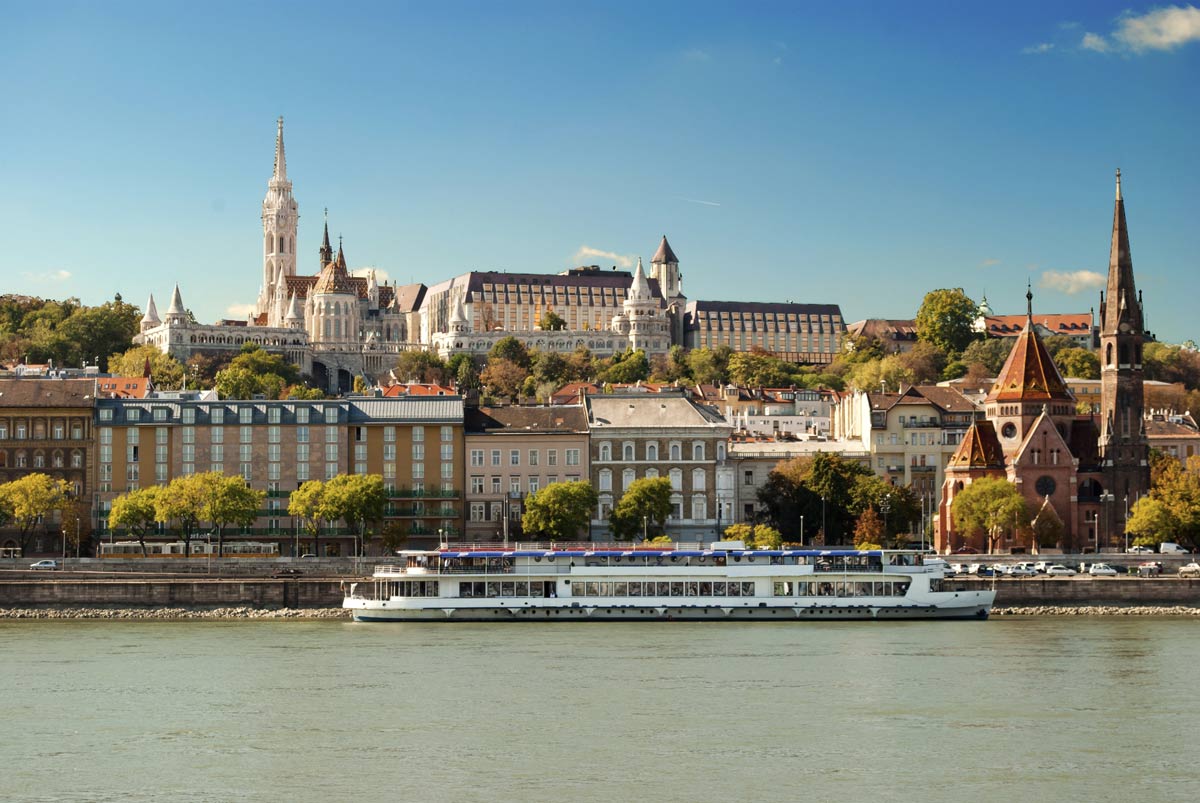

But here’s where the conversation gets interesting: river cruise or ocean cruise? Both have their zealots. Both have genuine, legitimate claims to the title of “best experience for someone who travels to eat and drink.” And the answer — genuinely — depends on the kind of traveler you are.
We’ve done the research. We’ve tasted the oysters in Médoc, the Syrah in Walla Walla, the wagyu in the Pacific. We’ve talked to the sommeliers, scrutinized the menus, and done the math on “all-inclusive.” This is the comparison we wish someone had handed us before we booked.
“The ship is the hotel. The river is the scenery. But the food and wine — that’s the whole point.”
First, Let’s Agree on What We’re Actually Comparing
We’re not here to talk about mega-ships with 5,000 passengers, three waterslides, and a Broadway revue. That’s a different category of travel entirely, and it’s not what Savored Journeys is about. We’re comparing boutique ocean cruises — think Windstar, Oceania, Explora Journeys, Azamara — against river cruises on lines like Viking, Uniworld, AmaWaterways, and Avalon Waterways.
The ships are intimate. The dining is serious. The wine programs have been curated by actual sommeliers. We’re comparing equals — just very different equals.
The Case for River Cruising: You Are, Quite Literally, Inside the Wine
Imagine waking up and looking out your window at terraced vineyards. Not a photograph of terraced vineyards. Not a painting. The actual Douro Valley — or the Côtes du Rhône, or the Médoc — slipping past in the morning light, so close you could nearly reach a hand out and trail it through the vines.
That is the singular, unrepeatable promise of river cruising for food and wine travelers. The itinerary doesn’t just pass through wine country. It moves through it like a thread through fabric.
The food and wine experience, on the ground
River cruise lines have understood this deeply for years. AmaWaterways hosts its Celebration of Wine itineraries with a resident sommelier who leads tastings and joins guests on vineyard visits. Avalon Waterways brings certified Masters of Wine aboard select sailings to pair each evening’s wines tableside — and then walk you through the same cellars the next morning. Uniworld’s Connoisseur Collection offers exclusive access to private estates you simply cannot book as an individual tourist.
On Viking’s Bordeaux itinerary — “Châteaux, Rivers & Wine” — guests hunt truffles in Périgord, blend their own Cognac at the Camus distillery, and savor fresh oysters from the bay at Arcachon, paired with crisp local whites. Every stop on that itinerary is food-intentional. Nothing is incidental.
The ships are small — typically 100 to 200 passengers — which means the dining room feels like a dinner party, not a cafeteria. You’re likely to sit next to the same people several nights running, which is either delightful or something to plan around, depending on your personality.

What it actually costs
River cruises are frequently all-inclusive in a meaningful way: meals, wine with dinner, shore excursions, gratuities, and Wi-Fi are often bundled. There are no “specialty dining” surcharges or drinks packages to agonize over. What you see is largely what you pay.
Entry-level river cruise fares for European wine itineraries typically start around $3,000–$4,500 per person for a week, which can represent genuine value when you factor in what’s included. The National Geographic/Lindblad Columbia & Snake Rivers “Food, Wine & History” expedition starts around $5,800 — steep until you realize that covers a wine curator from Food & Wine magazine, expert naturalists, kayak excursions, and every glass of wine on board.
The Case for Ocean Cruising: When the Ship Itself Is the Destination
There’s a moment on a boutique ocean cruise that doesn’t exist on a river. You’re at sea — genuinely at sea — with nothing but water in every direction and a dining room that rivals any restaurant you’ve loved on land. The sommelier sets a glass in front of you, mentions the volcanic soil of the Canary Islands, and you think: I am unreachable by the world right now, and I am eating extremely well.
That feeling is uniquely oceanic. River cruising, for all its intimacy, always has a shore. Ocean cruising has the beautiful, clarifying blankness of open water.

The culinary ambition has become genuinely extraordinary
The ocean cruise lines competing for food-driven travelers are not playing small anymore. Windstar is the official cruise line of the James Beard Foundation — menus are created by James Beard Award-winning chefs and served every night. Oceania’s culinary program has been shaped since 2003 by Jacques Pépin, and their newest ship, Allura (launched July 2025), continues that legacy with an expanded culinary advisory board of French master chefs.
Explora Journeys — only three years old and already at the top of the culinary rankings — offers nine distinct dining experiences. At Anthology, a seven-course tasting menu features Piedmont truffles, Amalfi lemons, A5 Japanese Wagyu, and Sicilian Bronte pistachios. There are cooking classes that end with a shared meal in a private oceanfront room, served alongside the instructors. It’s the kind of evening that reorganizes your sense of what dinner can be.
Regent Seven Seas’ Epicurean Explorer Tours take guests off the ship and into local markets, private cellars, and exclusive dinners prepared by noted chefs ashore — limited to 18 guests per session, which gives the whole thing the feel of an expensive private club you somehow got into.
The geography is broader — and occasionally staggering
River cruising is geographically magnificent but geographically bounded. You will see spectacular things. You will not see Santorini at sunrise from a ship’s bow, or the Norwegian fjords in late June light, or the Amalfi Coast from the water. Ocean cruises can cover ground — and coastline — that rivers simply cannot reach.
For food and wine travelers, this means access to ports like Marseille (bouillabaisse, local rosé, the Vieux-Port at golden hour), Dubrovnik (peka, plavac mali, and a seafood lunch that ruins you for restaurant fish forever), and Porto (a Francesinha at a corner café, a 20-year Tawny at a quinta in the Douro, just a train ride away). The ship delivers you; the port does the rest.

What it actually costs
Here’s where ocean cruises require more careful reading. “All-inclusive” means different things on different lines. On some ships, wine by the glass is included; specialty dining restaurants carry a cover charge. On others, the drinks package is an add-on. Gratuities may or may not be bundled. Before you book, run the real math: base fare plus the things you’ll actually do.
Oceania’s “Your World Included” program is a good benchmark: it bundles all specialty dining, gratuities, unlimited Wi-Fi, and a choice of wine and beer by the glass or shore excursion credit. That’s a genuinely honest all-in offer. Not every line matches it.
The Savored Journeys Rule of Thumb
Always price a cruise as total cost per day, not sticker price. A $6,000 river cruise that includes wine, excursions, and gratuities for seven nights is $857/day all-in. A $3,500 ocean cruise that requires drinks packages ($80/day), excursions ($100/day), and specialty dining ($40/night) is actually $1,120/day. Do the math before you fall in love with the brochure price.
✦
At a glance — how they stack up for food & wine travelers
River Cruising: Intimate · Immersive · Wine-forward
- Wine country out your window, literally
- Winery visits, vineyard hikes, cellar tours as standard excursions
- Truly all-inclusive pricing — no surprises
- Small ships (100–200 guests) = dinner party atmosphere
- Every port is a short walk from the ship
- Regional cuisine that changes with the river
- Calm water — ideal if ocean motion is a concern
Boutique Ocean Cruising: Ambitious · Expansive · Culinary-star driven
- Chef-driven dining at the level of serious land restaurants
- Greater geographic range — Mediterranean, Adriatic, Scandinavia
- Multiple onboard restaurants per ship
- At-sea days for uninterrupted dining and relaxation
- Cooking classes, sommelier masterclasses onboard
- Shore excursions to iconic food destinations (Amalfi, Marseille, Porto)
- More variety in price points and itinerary length
✦
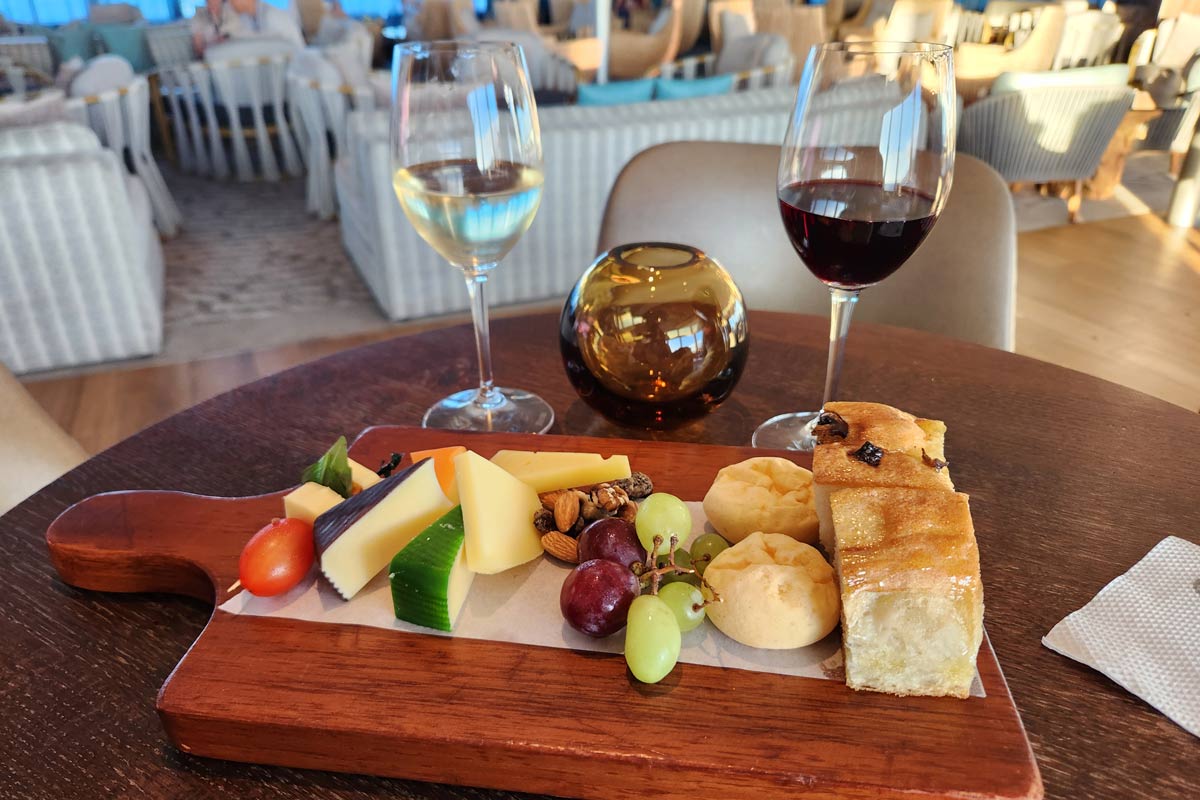
So Which One Is Actually Right for You?
Stop trying to pick the “better” option. Pick the one that matches how you actually travel.
River Cruise If You…
Want to live inside the wine region, not just visit it
- Love waking up somewhere new every morning
- Want to actually walk into a village, not just photograph it
- Find the idea of a 5,000-person ship exhausting
- Care about all-inclusive pricing with no hidden math
- Are a wine or food traveler first, a cruise traveler second
- Get seasick, or simply prefer calm water
- Are traveling as a couple or with one or two close friends
Ocean Cruise If You…
Want world-class dining with world-scale geography
- Dream of Michelin-quality meals at sea
- Want to cover significant ground — multiple countries, coasts
- Love the romantic blankness of open-water sailing
- Enjoy multiple restaurant options each night
- Want an at-sea day to recover between ports
- Are excited by cuisines beyond Europe’s wine regions
- Prefer a slightly larger ship with more social variety
✦

The Savored Journeys Take: Have You Considered Doing Both?
Here’s the genuinely useful insider play: combination cruising. Many of the best itineraries now connect river segments with short ocean legs — or start you on an ocean crossing and finish on a river deep in wine country. Alternatively, spend one year on a river (Bordeaux is the obvious first-timer choice), and use the experience to calibrate exactly what kind of food and wine traveler you are before you commit to a longer ocean voyage.
You’ll learn things about yourself. Whether you prefer the intimacy of 150 fellow passengers or the anonymity of 400. Whether you love the ritual of a fixed dining room or the freedom of choosing your restaurant each night. Whether the thrill is the open sea or the closeness of a vine-lined riverbank at dusk.
The beautiful thing about traveling for food and wine is that the eating and drinking is never wrong. It’s just the backdrop that changes. And both of these backdrops, chosen thoughtfully, are extraordinary.
“Neither choice is the wrong choice. The only wrong choice is booking a ship where the dining is an afterthought — and at this level of the market, that’s genuinely hard to do.”
A Few Lines Worth Knowing
For river cruising: AmaWaterways (wine-forward, great sommelier programs), Viking (elegant, excellent food, great value), Uniworld (boutique hotel energy, highest design standards), Avalon Waterways (Master of Wine sailings), and — if you want something completely unexpected and American — the National Geographic/Lindblad Columbia & Snake Rivers expedition, which pairs Pacific Northwest food and wine with genuine wilderness adventure.
For ocean cruising: Windstar (James Beard Foundation partnership, intimate ships, incredible culinary DNA), Oceania (Jacques Pépin legacy, the standard for food quality on a mainstream-premium line), Explora Journeys (the new benchmark for culinary ambition at sea), and Azamara (destination-deep, boutique, great for food travelers who want more time in port).
Wherever you land, order something you’ve never heard of, say yes to the wine pairing, and ask the sommelier where they’d go if they had a free afternoon in the next port. That’s where the real meal is.
Laura Lynch, creator and writer of Savored Journeys, is an avid world traveler, certified wine expert, and international food specialist. She has written about travel and food for over 20 years and has visited over 75 countries. Her work has been published in numerous guidebooks, websites, and magazines.